Louisiana Arrests Org gives you direct access to the Louisiana Statewide Arrest Database, containing every arrest recorded across the state since January 1, 2015. This public resource includes over 4 million entries as of December 2023, with each record showing the person’s full name, booking photo, charge type (misdemeanor or felony), exact booking time, and which law enforcement agency made the arrest. Data comes from all 64 parish sheriff offices, Louisiana State Police, and city police departments. You can search by parish, offense code, or whether the person is still in custody. The site also lets you download all results as a CSV file for research or background checks.
How Louisiana Arrests Org Works and What It Includes
Louisiana Arrests Org pulls real-time data from official sources across the state. Each entry is verified through parish jails and state agencies before appearing online. The system updates every 30 minutes to reflect new bookings, releases, and status changes. Users see mugshots, bond amounts, court dates, and detailed charge descriptions. The database covers everything from minor traffic violations to serious felonies. All records are public under Louisiana law, but users must follow strict rules about how they use the information.

Searching Arrest Records by Parish, Charge, or Release Status
You can filter searches using three main options: parish location, offense code, or release status. Selecting a specific parish shows only arrests from that area. Offense codes help narrow results to certain crime types like drug possession or theft. Checking “released” or “in custody” filters shows current inmates versus those no longer detained. These filters make it easy to find relevant records quickly. For example, someone checking on a family member can select their parish and see only local arrests.
Bulk Data Downloads for Researchers and Legal Professionals
Louisiana Arrests Org allows bulk downloads of search results in CSV format. This feature helps researchers, journalists, and legal teams analyze trends over time. You can export data showing arrest rates by parish, crime type changes year-over-year, or demographic patterns. The CSV includes all visible fields: name, photo link, charge, date, agency, and status. Downloads are free but limited to 10,000 records per request to protect server performance.
Victim Notification and Support Through AVNS
The Louisiana Automated Victim Notification System (AVNS) works alongside the arrest database to help victims stay informed. Call 866-528-6748 for live operator help or register at vinelink.com using site ID 19000. Once registered, you get email or text alerts when the offender’s status changes—like bond updates, court dates, or release. AVNS launched in 2008 and now serves more than 120,000 victims statewide. It’s free, confidential, and available 24/7.
Crime Victims Reparations Fund: Financial Help After a Crime
Victims of violent crimes in Louisiana may qualify for financial aid through the Crime Victims Reparations Fund. Managed by the Attorney General’s Office, this fund gives up to $1.2 million yearly to cover out-of-pocket costs like medical bills, counseling, or lost wages. To apply, you need a police report, court order confirming the crime, and receipts for expenses. Applications are reviewed within 90 days. The fund does not pay for property damage or minor injuries without lasting impact.
How to Check for Active Warrants in Louisiana
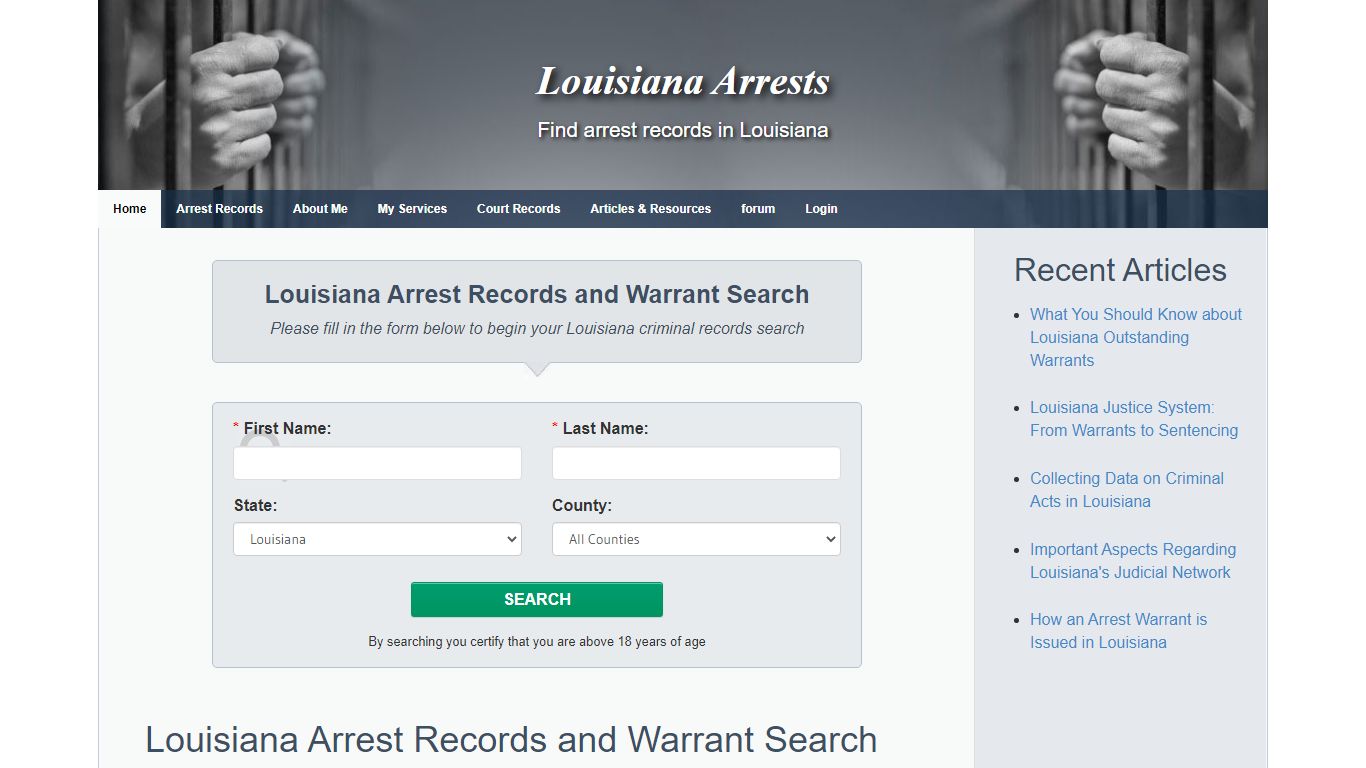
To search for active warrants, use the online form on Louisiana Arrests Org. You must confirm you’re at least 18 years old before proceeding. The system checks against Louisiana Code of Criminal Procedure Title 13, Chapter 3, which defines an active warrant as a judge-approved order to arrest someone or seize property. Results show the warrant date, issuing judge, charge, and current status—whether it’s active, recalled, or executed. Never ignore a warrant; contact a lawyer immediately if one appears under your name.
2018 Crime Statistics: Violent vs. Property Arrests
In 2018, Louisiana recorded 25,149 arrests for violent crimes and 152,661 for property crimes. Violent crimes included 530 murders, 2,085 rapes, 4,568 robberies, and 17,266 aggravated assaults. Property crimes broke down into 38,742 burglaries, 56,119 thefts, 24,300 vehicle thefts, and 33,500 cases of arson or vandalism. Compared to 2017, violent arrests rose 2.3%, while property arrests dropped 1.8%. These numbers come from official reports by Louisiana State Police and the Office of Public Safety.
August 2022 Data Spike: Drug Arrests Rise in Major Parishes
August 2022 saw a sharp increase in drug-related arrests across Louisiana’s four largest parishes—Orleans, East Baton Rouge, Jefferson, and Caddo. A total of 3,412 drug offenses were logged that month alone. The most searched terms on Louisiana Arrests Org included “Louisiana arrest report,” “state of Louisiana arrest records,” and “Louisiana arrest org.” A free summary PDF is available showing charge breakdowns, top zip codes for arrests, and year-over-year comparisons between violent and property crimes.
Lafayette Parish Warrant Search: In-Person and Online Options
For Lafayette Parish warrants, visit the Clerk of Court at 316 W Main St, Lafayette, LA 70501. Bring a government-issued ID and the full name of the person you’re checking. Staff process requests in about 15 minutes during business hours (8 a.m. to 4 p.m., Monday to Friday). Alternatively, submit an online request through the secure portal and receive a PDF report within 24 hours. Both methods are free and provide the same official information.
Livingston Parish Inmate Lookup: Real-Time Booking Details
The Livingston Parish Sheriff’s Office offers a 24/7 online inmate search tool. Enter a name, booking number, or DPS ID to see current bookings, charges, bond amounts, and release dates. Each record lists prior convictions, arresting officer badge numbers, and links to court dockets. The system refreshes every 30 minutes, ensuring near real-time accuracy. This service is free and accessible from any device with internet.
Acceptable Use Policy and Legal Disclaimers
Louisiana Arrests Org prohibits commercial resale of data, automated scraping, and posting false or defamatory content. The site is not an official government resource and is not affiliated with the U.S. Department of Justice. Information may not be real-time, so always verify critical details with the original law enforcement agency before making decisions. Misuse can result in IP bans or legal action.
National Coverage: How Louisiana Fits Into Arrests.org
Arrests.org hosts inmate records from 3,454 county jails nationwide, covering over 95% of all U.S. jail populations. Louisiana’s data integrates seamlessly into this network, allowing cross-state searches. Users can find recent mugshots, bond info, and court links for facilities from rural Arkansas to major cities like Los Angeles. Nightly updates ensure accuracy across all states.
Caddo Parish and the Death Penalty: A Historical Shift
In August 2015, Caddo Parish was named the death penalty capital of Louisiana after recording 12 capital convictions between 2010 and 2014. This marked a dramatic shift from the 1970s, when the parish accounted for less than 5% of such cases. Experts credit aggressive prosecution tactics and the creation of a specialized homicide unit in Shreveport in 2008 for the change.
Contact Information and Office Hours
For in-person inquiries, visit the Lafayette Parish Clerk of Court at 316 W Main St, Lafayette, LA 70501. Office hours are Monday to Friday, 8 a.m. to 4 p.m. Call ahead to confirm procedures. For online help, use the contact form on Louisiana Arrests Org or email support through the site. Response time is typically under 24 hours.
Related Resources for Background Checks
Why Louisiana Arrests Org Is the Most Trusted Source
Louisiana Arrests Org stands out because it combines statewide coverage, frequent updates, and user-friendly tools. Unlike fragmented parish sites, it offers one portal for all records since 2015. The inclusion of victim services, warrant checks, and bulk data makes it valuable for families, employers, and researchers. Strict privacy rules and clear disclaimers build trust while keeping information accessible to the public.
Common Misconceptions About Public Arrest Records
Many people think arrest records mean guilt, but an arrest is not a conviction. Records can contain errors or outdated info. Always check with the arresting agency for the latest status. Also, not all crimes appear instantly—some take days to process. Louisiana Arrests Org provides timestamps so you know when data was last updated.
How Employers and Landlords Use Arrest Data
Employers and landlords often review arrest records during background checks. Louisiana law limits how this info can be used. Arrests without convictions cannot disqualify job applicants unless directly related to the role. Landlords must follow fair housing laws and cannot discriminate based on arrest history alone. Always ask candidates for context and verify with official sources.
Privacy Concerns and Your Rights
Your arrest record is public unless sealed by a judge. You can request expungement for certain offenses after a waiting period. Louisiana allows expungement for first-time misdemeanors after five years and some felonies after ten. Contact the court where you were charged to start the process. Louisiana Arrests Org cannot remove records—only courts can.
Mobile Access and User Experience
Louisiana Arrests Org works on phones, tablets, and computers. The mobile version loads quickly and keeps all search features. Images are optimized for fast viewing, and forms are touch-friendly. No app is needed—just visit the site from any browser. Data loads securely with HTTPS encryption to protect your searches.
Future Updates and Expansion Plans
The site plans to add more historical data going back to 2010 and improve map-based searches by parish. Users may soon filter by age, gender, or race (for research purposes only). Enhanced victim support tools and multilingual options are also in development. Feedback from users helps shape these updates.
Frequently Asked Questions
Below are common questions about Louisiana Arrests Org, warrant searches, victim rights, and data accuracy. Each answer provides clear, actionable guidance based on current Louisiana law and official procedures.
Can I remove my arrest record from Louisiana Arrests Org?
No, Louisiana Arrests Org cannot remove records. Only a court can seal or expunge an arrest. You must file a petition in the parish where the arrest occurred. If granted, the court will notify all agencies, including the database. This process takes months and requires legal help. The site only displays public records and follows state law.
Is the information on Louisiana Arrests Org always up to date?
The site updates every 30 minutes, but delays can happen. Smaller parishes may take longer to submit data. Always check the timestamp on each record. For urgent matters like bail or court dates, call the jail or clerk directly. The site is a helpful tool but not a replacement for official sources.
How do I report incorrect information on my record?
Contact the arresting agency first—such as the sheriff’s office or city police. Provide proof of the error, like a court dismissal or corrected charge. Once they fix their records, the change appears on Louisiana Arrests Org within 24–48 hours. If the agency refuses, consult a lawyer about filing a correction request with the court.
Can I use this data for employment screening?
Yes, but with limits. Louisiana law bans discrimination based solely on arrests without convictions. Employers must consider job relevance and allow applicants to explain. Never make hiring decisions without verifying records with the court. Misuse can lead to lawsuits under fair hiring laws.
Are mugshots on the site considered public record?
Yes, booking photos are public under Louisiana law once someone is arrested. They remain online even if charges are dropped. Some states restrict mugshot use, but Louisiana allows full access. However, republishing them for profit or harassment violates the site’s terms and may lead to legal action.
How does the victim notification system protect my privacy?
AVNS keeps your contact info confidential. Only you receive alerts about the offender’s status. Law enforcement cannot see your registration. You can cancel alerts anytime online or by calling the hotline. The system uses secure servers and does not share data with third parties.
What should I do if I find an active warrant for myself?
Do not ignore it. Contact a criminal defense lawyer immediately. Turning yourself in with legal help often leads to better outcomes. Some warrants can be resolved by paying fines or appearing in court voluntarily. Running increases penalties and may result in forcible arrest.
Official Website: www.louisianaarrests.org
Toll-Free Victim Hotline: 866-528-6748
Lafayette Parish Clerk of Court: 316 W Main St, Lafayette, LA 70501
Office Hours: Monday–Friday, 8 a.m.–4 p.m.